Stretching is a key part of any fitness routine, but not all stretches are created equal.
Dynamic and static stretching are two different approaches, each with its own benefits, and understanding when and how to use them can make a big difference in your performance, recovery, and overall mobility.
What Is Dynamic Stretching?
Dynamic stretching involves active, controlled movements that take your muscles and joints through their full range of motion. These movements are designed to warm up the body, increase blood flow, and prepare muscles for the activity ahead. Unlike static stretching, dynamic stretches are not held for long periods – they are continuous and often mimic the motions of your workout or sport.
For example, knee hugs are a simple dynamic stretch. By pulling one knee to your chest while balancing on the other leg, you engage your glutes and lower back while improving hip mobility, balance and stability. This makes them an excellent choice before a run, lower-body workout, or any activity that involves leg movement. Other dynamic stretches include leg swings, arm circles, or walking lunges, all of which get your body ready for action.
Dynamic stretching not only prepares your body physically but also mentally signals that it’s time to move, which can help improve focus and performance. Studies have shown that incorporating dynamic stretches before exercise can enhance power, speed, and overall athletic performance.
What Is Static Stretching?
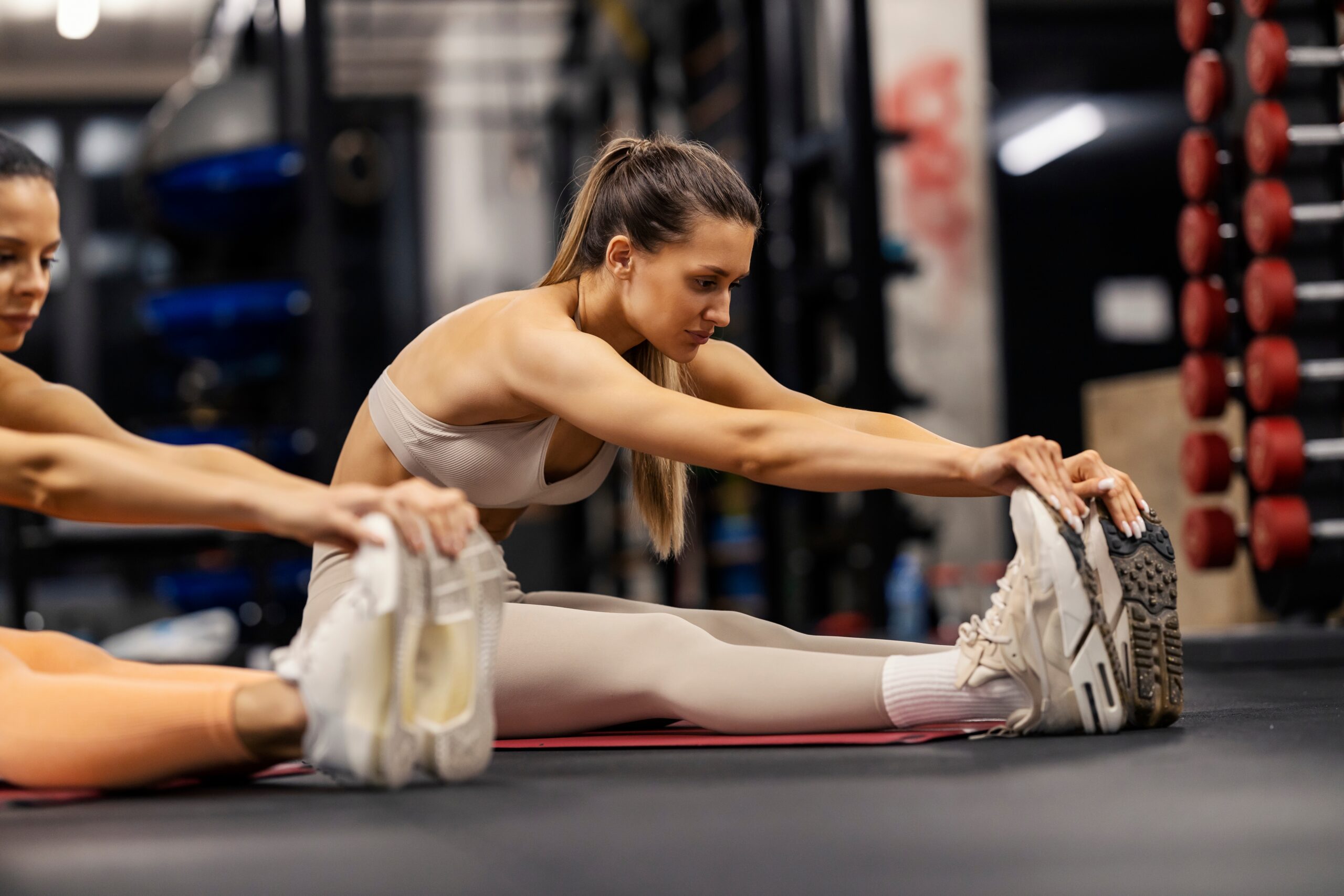
Static stretching is the opposite approach: you hold a stretch in a fixed position for a set period, usually between 30 and 45 seconds. These stretches are passive, meaning you’re not actively moving in and out of the position, and they are best used after exercise.
Static stretches help relax muscles, improve overall flexibility, and promote recovery by reducing muscle stiffness and soreness. For instance, the cross-body shoulder stretch is a popular static stretch that relieves tension in the shoulders, upper back, and chest. Other examples include the hamstring stretch, seated butterfly stretch, or calf stretch, all of which can aid in recovery and improve your long-term mobility.
In addition to physical benefits, static stretching can also have a calming effect on the nervous system, helping you transition from an intense workout to a state of rest and recovery.
Dynamic vs. Static: When to use each
The key takeaway is that dynamic and static stretching serve different purposes, and neither is “better” overall. Dynamic stretching is ideal for warming up, activating muscles, and preparing the body for movement. Static stretching is ideal for cooling down, relaxing muscles, and improving flexibility over time.
By incorporating both into your fitness routine, you can:
- reduce the risk of injury by preparing muscles and joints before activity
- improve performance by enhancing mobility and muscle activation
- support recovery and prevent stiffness after workouts
- maintain long-term flexibility and joint health.
The power of a good stretch
A well-rounded fitness routine doesn’t have to choose between dynamic and static stretching – they complement each other. Start your workouts with dynamic stretches to get your body moving and finish with static stretches to help your body recover. Over time, this combination can help you move more efficiently, perform better, and stay injury-free.