Written by Marcin Piotrowski, Gym+Fitness Instructor at PCYC Pine Rivers
Training as we age is all about choosing smarter ways to keep our bodies strong endure and mobile. While the body naturally undergoes changes over time such as reduced muscle mass, decreased bone density, and slower recovery – regular exercise remains one of the most powerful tools for maintaining health, independence, and quality of life.
Strength training should be one of the most important aspects of training as we age. Did you know that after the age of 30, adults can lose 3–8% of muscle mass per decade? This process is known as sarcopenia. To counteract this decline, adding resistance training sessions to training schedule will preserve and even build muscle. Additionally, this will improve strength as well as support joint stability and balance. Focusing on simple exercises like squats, push-ups, and resistance band training can be highly effective when performed consistently.
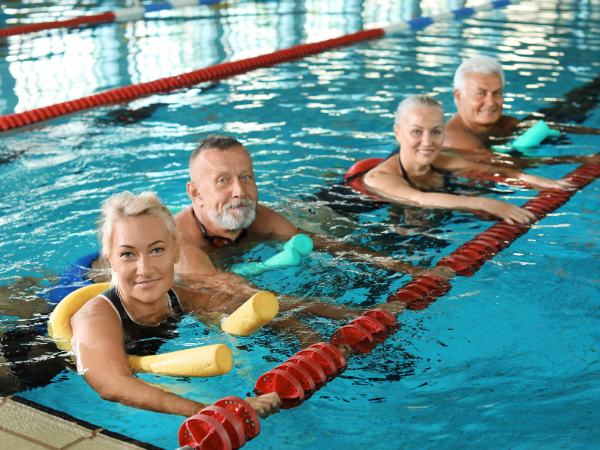
As we age, the risk of cardiovascular disease increases, making regular aerobic exercise essential. Cardiovascular training holds as high importance as strength. Basic activities such as walking, cycling, or swimming can help maintain heart health, improve circulation, and boost endurance. The key is to choose low-impact activities that are gentle on the joints while still elevating the heart rate.
Mobility and flexibility are also becoming more critical with age. Stiffness in joints and muscles can limit movement and increase the risk of injury. To enhance range of movement and reduce discomfort it is recommended to incorporate various stretching routines, mobility drills, yoga, or Thai-chi sessions. This type of exercise also supports better posture and functional movement in everyday life.
Older adults generally require more time to recover between workouts due to slower tissue repair and hormonal changes. This doesn’t mean that they must train less, but rather balancing intensity and rest more carefully. The few major components that will play a vital part role in adequate recovery are listening to the body, getting adequate sleep, and maintaining proper nutrition.
The final and most crucial part in training as we age should be an injury prevention. Correct warm-ups, proper technique, and gradual progression are essential to avoid strain. Basically, it is more beneficial to focus on controlled, high-quality movements than approaching heavy weightlifting or high intensity workouts without the right preparation. Working with a qualified professional or following a structured program can provide guidance and reduce risk.
Ultimately, training as we age is about longevity, not just high performance. Consistency becomes more valuable than intensity, and small, regular efforts add up over time. By adapting correct training structures to suit changing needs, older adults can remain strong, active, and resilient well into later life.
Ageing is inevitable, however how we move through those years is largely within our control.
References
- Why Strength Training is Important as You Age, 2026, The Guthrie Clinic
- Growing Stronger, 2012, Hancock centre of Physical Activity and Nutrition
- Muscle strength, power and adaptations to resistance training in older people. European journal of applied physiology, 2004, Macaluso, A., De Vito G