Meet Michael! He’s one of our bubbly and cheeky Gym+Fitness members at PCYC Ipswich.
I have been a member of the PCYC Ipswich for over 3 years.
I love the gym atmosphere and mate ship that I have found at the PCYC Ipswich. The space is well kept and has great new equipment. The atmosphere is also made by the people who are easy to talk to.
During my fitness journey I never thought that I would get so big and strong. I fell in love with the process of beating my own numbers and seeing the results on my body. With consistency I felt that the journey was fun and easy. I hope with consistency; I will find my way to the body building stage and win.
My favourite movements are anything chest related, however if I have to choose one, I will choose the incline bench press.
Discover PCYC Ipswich or view the club timetable.
If you’ve ever stepped into the PCYC South Burnett gym and been greeted with a big smile and an infectious energy, chances are, Lori was in the building! She welcomes everyone with enthusiasm and is always ready to push them to their limits.
💪 Favourite Exercise: Burpees (of course!)
🔥 Favourite Sayings: “The taste of vomit after a workout is the taste of success.”
My fitness journey began 16 years ago as a volunteer. From there, I became a group fitness trainer and progressed to a personal trainer.
Everything! I love inspiring and encouraging people to achieve things they never thought possible. I love the lifestyle, feeling fit and strong, staying busy, and being a role model for my family and community.
I am always training to reach new personal bests, believing that progressive overload is the key to getting stronger.
My favourite moment in my journey would have to be completing Level 2 CrossFit training!
Discover PCYC South Burnett or view the club timetable.
By our Gym+Fitness team at PCYC Beenleigh
Staying fit to keep up with our children is something we all must do. But what if you can keep fit with your kids? You’re getting in exercise; they’re burning all that energy and potentially need an early night. A win-win!
Physical activity improves overall physical fitness. By being active, your little ones develop cardiovascular endurance, flexibility, muscular strength, and muscular endurance, all while promoting agility and developing balance. Using the large muscles of the arms, legs, and body by crawling, running, and jumping, children hone ‘whole body movement’ skills which develop gross motor skills in a way like no other. The best thing we can do as parents is to be the best and healthiest version of ourselves.
By making time for our own exercise, making healthy food choices and demonstrating a positive attitude to our own body shape, we have a huge impact on our children. Although this is not always easy, it is truly the most effective and powerful road to take.
Doing a form of exercise as a family will build healthy habits in your child by getting active with them at a young age. You can all enjoy the health benefits mentioned above by working out together.
Bush/Beach walks
We are very lucky in Australia to be blessed with amazing treks inland, and kilometers of coastline to get those steps in. Maybe set a little challenge to see if you can do 1-3km as a family with a very light jog and go from there (A 7-year-old can average 15,000 steps a day so go that bit further).
Create your own mobile gym
A couple of towels, some basic weights, a resistance band or two and you’re set. The hardest part is deciding where to set the gym up. Is it going to be the park, near the beach, the garage at home or at a friend’s house where there is more equipment?
Swimming
Swimming is a life skill we all should have, but also is an awesome way to keep fit. See who can get the most lengths completed in a certain time or over the course of a month, to create a habit and some consistency in training.
Bike
A great family activity is going on a big bike ride and seeing where you end up. There are so many designated cycle tracks with picnic stops along the way, make a day of it and burn a good few hundred calories in the process.
Your children will make you accountable for staying active and moving, as you would for them. Keep all parties happy by doing a few things together and reap the rewards.
By Rhys, Club Manager at PCYC Logan
Strength training is one of the most effective ways to improve your overall health and fitness, yet many people still shy away from it due to common myths or misunderstandings. In this article, we’ll take a closer look at the basics of strength training, explore its many benefits, and clear up some of the most common myths. Whether you’re new to exercise or looking to take your fitness to the next level, strength training has something to offer everyone.
This is also referred to as resistance training. This is where you use any form of object (e.g., bar, dumbbell, resistance band or even body weight) to create a resistance against the muscle to stimulate the muscle. One type of strength training is Hypertrophy training which uses less weight to stimulate the muscle (e.g., 3 sets, 12 reps of a workout). This stimulates the muscle in a range of motion for a high number of reps that we can use a lighter weight that will be healthier for the joints. If you are training to be as strong as you possibly could, you would use heavy weights to build your muscle, in a smaller number of reps (e.g., 6 sets of 3 reps).
Men in their first year of training are likely to see anywhere between 5-10kg of muscle mass built in their first year. For women, it is half of this with 2.5-5kg of muscle. In the second year, those numbers are halved – men will gain between 2.5-5kg and women 1.25-2.5kg. The third year, you half that again, and keep halving as the years go on. This means that getting bulky is out of the equation.
One of the major benefits is reducing the chances of muscle atrophy – where your muscle drops off the body over a period of time. Most inactive adults will experience 8% of muscle mass loss per decade, leading to an increase in body fat and reduction in daily calorie expenditure.
Sarcopenia is becoming more common in adults and sedentary workers. This is where your body reduces the muscle mass loss per decade at a higher rate. This is a lot more common now that we are living in the sedentary age. This puts older adults at risk of having falls, breaking hips, having their bone mineral density drop, lower muscle mass and a higher risk of injury. The only cure to this is resistance training. It will happen to those who do not train. We want to train for the life we want to live for the rest of our lives.
Another major benefit is injury prevention. Your body will push through a large range of motions that will reduce the number of injuries. For example, single leg exercises will reduce the amount of muscle tears in older adults as there is strength in those areas, and shoulder excercises with weights will reduce joint injuries.
Below are a plethera of other benefits you recieve when you do strength training:
The work we do in the gym allows us to live a better quality of life outside of the gym.
Training in a progressive overload is a sustainable way for training long-term. This is the ability to continuously make your workouts harder so the muscle does not adjust to the stimulant.
A great example of this is the tale of Milo and the bull. Milo was a farm boy that carried a calf on his shoulder every day. As the calf grew in size and became a bull, Milo grew stronger and was able to carry the bull on his shoulders. Milo used weight as a metric of measure, but you can use other tools to make your training harder (e.g., increasing reps or sets, slowing your movement, changing the tempo, changing equipment types). If we don’t do this, we will stay the same. After 4 weeks, what you started doing will become too easy, so you will need to measure. What gets measured gets improved.
Our goal is to quite literally microscopically tear a muscle. When we finish working out, our body will work to repair or replace the damaged muscle fibers through a cellular process where it fuses the muscle fibers together, to form new muscle protein strands. These repaired muscle strands will increase in thickness and number to create muscle growth. If you don’t eat enough protein, the muscle will not be able to heal correctly, and you will feel sorer for longer. This all happens while we rest, that is why rest is so important in the first 24-48 hours after your workout.
Want to start incorporating strength training into your routine, but not sure where to start? As a PCYC Gym+Fitness member, you can participate in our Activ8 Group Training classes, specifically our Activ8 Strength classes every Tuesday & Thursday!
Don’t have Activ8 Group Training at your club? You can participate in our Activ8 Fundamentals program that includes a range of strength training to incorporate into your routine!
By our Gym+Fitness team at
The benefits of keeping our bodies fit and active as we transition into retirement not only have added social benefits but can also go a long way to support a more enjoyable and prolonged life. Exercise has been shown to prevent disease, lower the risk of falls, improve mental health and well-being, strengthen social ties and improve cognitive function.
You should aim for about 30 minutes of moderate-intensity physical activity every day. Moderate-intensity exercise should make you feel a bit breathless, but you should still be able to talk comfortably. Incorporate different types of physical activity into your daily routine. This will keep it interesting and easier to stick to over time.
If you are stuck for ideas please drop into your local PCYC Queensland Gym+Fitness Club and a member of the team will show you our Activ8 Fundamentals program. This program offers all Gym+Fitness members 4 to 12 weeks of support from qualified Trainers – free of charge!
By our Gym+Fitness team at PCYC Hills District
Exercise is often praised for its physical benefits, but its impact on mental health can be equally profound. Engaging in regular physical activity has been shown to have a positive effect on mental well-being, offering a holistic approach to mental health maintenance and improvement.
One of the most notable benefits of exercise on mental health is its ability to reduce stress and alleviate symptoms of anxiety and depression. When you exercise, your body releases endorphins, neurotransmitters that act as natural painkillers and mood elevators. These endorphins not only enhance your sense of well-being but also help to alleviate feelings of stress and anxiety, leaving you feeling more relaxed and at ease.
Exercise can also serve as a powerful distraction from negative thoughts and rumination. By focusing your attention on physical activity, you can temporarily shift your focus providing a much-needed mental break. This diversion can help break the cycle of negative thinking patterns and provide a sense of relief and clarity.
Regular exercise has also been linked to improved sleep quality, another crucial aspect of mental health. Sleep plays a vital role in regulating mood, cognition, and emotional well-being. By engaging in physical activity, you can promote better sleep patterns, helping you feel more refreshed and energised during the day.
Exercise offers opportunities for social interaction and connection, which are essential for mental health. Whether it’s joining a group training class, going for a walk with a friend, or participating in team sports; exercising with others can provide a sense of camaraderie and support. These social connections can help combat feelings of loneliness and isolation, fostering a sense of belonging and community. If you have a club with Activ8 Group Training nearby, give it a go and find a new workout buddy!
In addition to its immediate benefits, regular exercise can also have long-term effects on mental health. Research suggests that consistent physical activity may reduce the risk of developing certain mental health conditions, such as depression and anxiety disorders. By incorporating exercise into your daily routine, you can build resilience to stress and improve your overall psychological well-being over time.
Whether it’s a brisk walk, a yoga session, or a high-intensity workout, finding activities that you enjoy and that suit your lifestyle is key to maintaining a consistent exercise routine.
Exercise is a powerful tool for promoting mental health and well-being. By prioritising exercise as part of your self-care routine, you can cultivate a healthier mind and body, ultimately leading to a happier and more fulfilling life.
By our Gym+Fitness team at PCYC Goondiwindi
Is sugar really bad for you? Is it addictive? How much is too much? Are there different types of sugar? In this article we aim to answer all your questions and bust all the myths surrounding the great sugar debate!
In a nutshell sugar is simple carbohydrate. Carbohydrates along with Protein and Fat are Macronutrients that provide your body with energy. Our bodies need varying amounts of each macronutrient to function. Sugar comes in many forms – fructose, glucose, sucrose, lactose, and they all have a different effect on the body and brain.
Sugar is sugar, no matter how processed, fancy or popular it is.
– Tara Leong, ‘The Nutrition Guru and the Chef’
Sugar can be found in many natural and processed foods. Dairy products, vegetables, soy products and of course natures natural lolly – fruit. Fruits and vegetables contain many more necessary micronutrients and should be included in a healthy well-balanced diet. Processed sugar is often used as a flavour enhancer and preservative in packaged foods. ie Lollies, soft drinks, cakes and pastries fruit juice and condiments … the list goes on!
Food Standards Australia recommends for an adult of a healthy body mass index to consume no more then 50g or 12 teaspoons of free sugar per day. Free sugar includes all sugars defined as added sugars and the sugar component of honey, fruit juice and fruit juice concentrates. You may find it interesting to track your sugar over the course of a week. Make note of the sugar content on all labels – cereals, pasta sauces, spreads as well as drinks and sugar added to teas and coffees. You might be surprised! A study from the Sugar Nutrition Resource Centre shows that in 2011-12, Australians consumed an average of 60 grams of free sugars per day (equivalent to 14 teaspoons of white sugar). The majority of free sugar intakes comes from added sugars with an average 52 grams (or 12 teaspoons), with 7 grams of free sugars coming from honey and fruit juice. One 375ml can of soft drink contains over 44grams of sugar!
Sugar addiction has been the subject of many books, diets, and studies over the last few years, but is it really addictive? One study done on animals showed similar effects of bingeing and withdrawal behaviour similar to drug abuse. (Colantuoni et al., 2001/2002) The reviewed evidence supports the theory that in certain people, often obese and/or bulimic, sugar can lead to behaviour and neurochemical changes that resemble the effects of a substance of abuse. In a well-balanced diet, there is no evidence of sugar dependence. (Neuroscience and biobehavioral reviews)
Does sugar cause disease? Well not directly…it’s the amount of sugar consumed that has an adverse effect on the body. Excess sugar can lead to several health complications – obesity, metabolic syndrome and inflammatory diseases just to name a few. Different types of sugars have different effects on the body and brain.
“The body does not respond the same way to fructose in fruit as to added fructose. As an added sugar, fructose is particularly implicated in metabolic syndrome, hypertension, insulin resistance, lipogenesis, diabetes and associated retinopathy, kidney disease and inflammation.” (Impact of sugar on the body, brain and behaviour. Frontiers in bioscience)
The answer to the BIG question is NO and YES.
NO – If we are consuming the right amount of sugar for our daily intake from natural sugars with the occasional treat, we can sustain a health body and mind.
YES – If consuming excessive amounts of sugars above the recommended daily intake from processed and added sugar foods and drinks, we can develop poor health and disease.
All in all, moderation is key when it comes to sugar.
– Tammy Bell, PCYC Goondiwindi
By our Gym+Fitness team
Do you want to build a stronger core? Add these exercises to your regular workout routine to feel the burn and gain some strength!
Day 1: 20 Crunches, 15 Leg Raises, 30s Plank
Day 2: 25 Crunches, 20 Leg Raises, 35s Plank
Day 3: 30 Russian Twists, 15 Sit-Ups, 40s Plank
Day 4: 20 Bicycle Crunches (each side), 15 Reverse Crunches, 45s Plank
Day 5: 25 Crunches, 20 Flutter Kicks (each side), 50s Side Plank (each side)
Day 6: 30 Russian Twists, 20 Heel Touches, 55s Plank
Day 7: Rest & Recovery
Day 8: 35 Crunches, 25 Leg Raises, 60s Plank
Day 9: 30 Bicycle Crunches, 20 Sit-Ups, 50s Side Plank
Day 10: 40 Russian Twists, 25 Flutter Kicks, 45s Plank
Day 11: 25 Reverse Crunches, 30 Heel Touches, 50s Plank
Day 12: 30 V-Ups, 30 Bicycle Crunches, 60s Side Plank
Day 13: 40 Russian Twists, 20 Mountain Climbers, 60s Plank
Day 14: Rest & Recovery
Day 15: 40 Crunches, 30 Leg Raises, 60s Plank
Day 16: 35 Bicycle Crunches, 25 Sit-Ups, 55s Side Plank
Day 17: 50 Russian Twists, 30 Flutter Kicks, 60s Plank
Day 18: 30 Reverse Crunches, 35 Heel Touches, 50s Plank
Day 19: 40 V-Ups, 30 Bicycle Crunches, 60s Side Plank
Day 20: 50 Russian Twists, 25 Mountain Climbers, 70s Plank
Day 21: Rest & Recovery
Day 22: 50 Crunches, 35 Leg Raises, 70s Plank
Day 23: 40 Bicycle Crunches, 30 Sit-Ups, 60s Side Plank
Day 24: 60 Russian Twists, 35 Flutter Kicks, 70s Plank
Day 25: 35 Reverse Crunches, 40 Heel Touches, 60s Plank
Day 26: 50 V-Ups, 40 Bicycle Crunches, 70s Side Plank
Day 27: 60 Russian Twists, 30 Mountain Climbers, 80s Plank
Day 28: Rest & Recovery
By our Gym+Fitness team at PCYC Dalby
Training whilst on your period can sometimes feel like an uphill battle. Due to the wave of hormonal changes that occur during a menstrual cycle, your body may not always perform at its peak. ‘Cycle Syncing’ is the practice of syncing training sessions with the hormonal changes that occur during this time. Some reasons for adapting ‘Cycle Syncing’ to your training can be:
During the follicular phase (14 days from the first day of your period), estrogen levels rise. This leads to potentially higher energy levels and increased performance, making this phase ideal for increasing the intensity of training sessions. This phase is also the perfect time for chasing those all-important strength and muscle gains.
At the luteal phase (day 15 onwards of a 28-day cycle) of the menstrual cycle, the increase in progesterone can result in an increase of body temperature and a decrease in energy. During this phase it is important to listen to your body and incorporate more rest where it is needed.
Being aware of the phases of your cycle can help in assessing your body’s needs so you can adjust your training accordingly. This will foster a deeper connection to your overall health and wellbeing both physically and emotionally.
It is always important to remember that what is experienced during a menstrual cycle is unique. Not everybody’s cycle neatly follows a typical phase. Factors like stress, lifestyle factors and overall health can have an impact on how you will feel throughout your cycle. If needed, adjust workouts according to the phase and how you are feeling and always listen to your body. If you feel you need guidance before making significant changes to your training routine, always consult with a healthcare professional.
Tracking your progress through body measurements is one of the most reliable ways to measure real results beyond just the number on the scale.
Consistency Tips
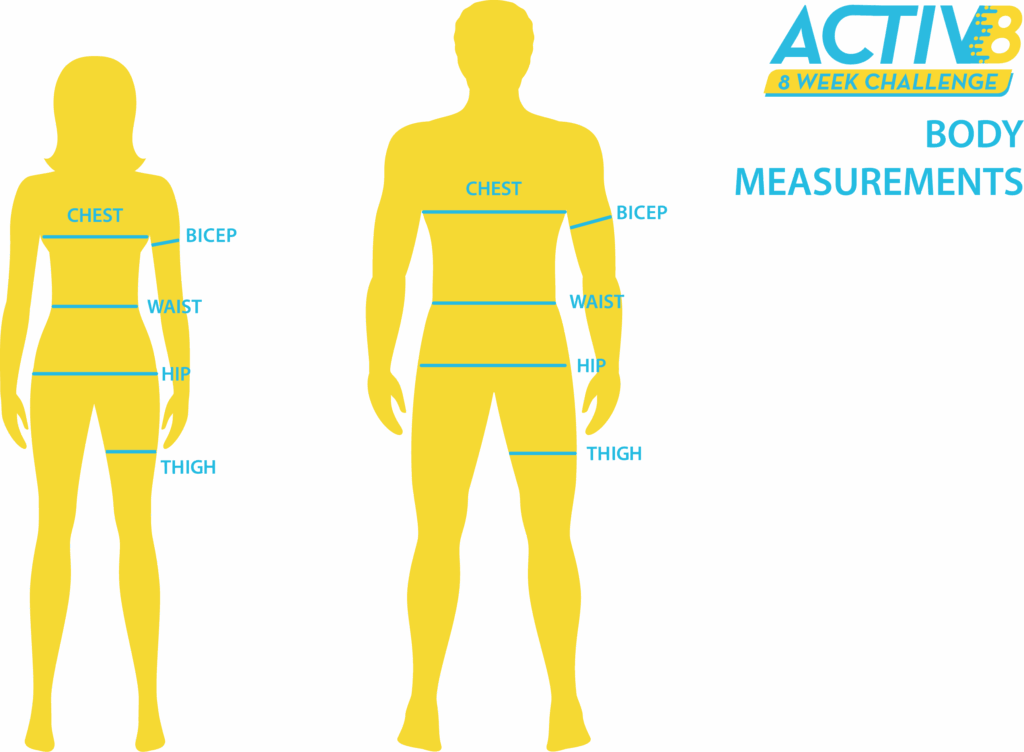
Here’s how to properly measure the 5 key areas:
Arms (Biceps)
Where: Measure the thickest part of your upper arm (biceps).
How: Keep your arm relaxed by your side with your palm facing forward. Wrap the measuring tape around the peak of the bicep muscle belly.
Tip: If you’re unsure where the thickest part is, gently feel your upper arm to find the peak of the bicep when relaxed and that is the spot.
Chest
Where: Across the nipple line.
How: Stand tall and wrap the tape evenly around your chest, arms raised slightly to position the tape. Bring your arms back down, adjust the tape to ensure its flat and snug (not tight), and then take your measurement.
Waist
Where: At the narrowest point of your torso. If this is unclear, measure across the belly button.
How: Stand relaxed, exhale gently, and wrap the tape around your waist. Make sure the tape is level, flat, and snug, not squeezing.
Hips
Where: The widest part of your glutes.
How: Stand with your feet together and wrap the tape around the fullest part of your buttocks. Ensure its level and snug all the way around.
Legs (Thighs)
Where: 25 cm (10 inches) above the top of your kneecap (patella).
How: Stand tall and measure around the midpoint of your thigh. Alternatively, place your pinky on your kneecap and stretch your thumb up to mark the mid-thigh.
Bonus: Weigh yourself
Weigh in each time you take your measurements for a complete picture of progress.
Do it under the same conditions (same scale, time of day, and clothing).